Strategic Paid Ads Management for Nonprofits & NGOs: Maximizing Donor Reach and Mission Impact in 2026
by Eric Barker · November 9, 2025
Transform limited marketing budgets into powerful donor acquisition engines with strategic paid advertising that reaches the right supporters at the right time.
For nonprofits and NGOs, every marketing dollar must work harder. Unlike commercial enterprises with flexible budgets, mission-driven organizations face constant pressure to demonstrate stewardship while competing for attention in an increasingly crowded digital landscape. Strategic paid ads management offers a solution: precision-targeted campaigns that connect your cause with passionate supporters, volunteers, and donors who are actively searching for ways to make a difference.
The challenge isn't just reaching people—it's reaching the right people with messaging that resonates deeply enough to inspire action. Whether you're driving monthly giving programs, promoting fundraising events, recruiting volunteers, or raising awareness for urgent campaigns, paid advertising provides the targeting sophistication and measurement capabilities that organic efforts alone cannot match. When executed strategically, paid ads become a force multiplier that amplifies your mission, extends your reach exponentially, and creates sustainable growth in supporter engagement and revenue generation.
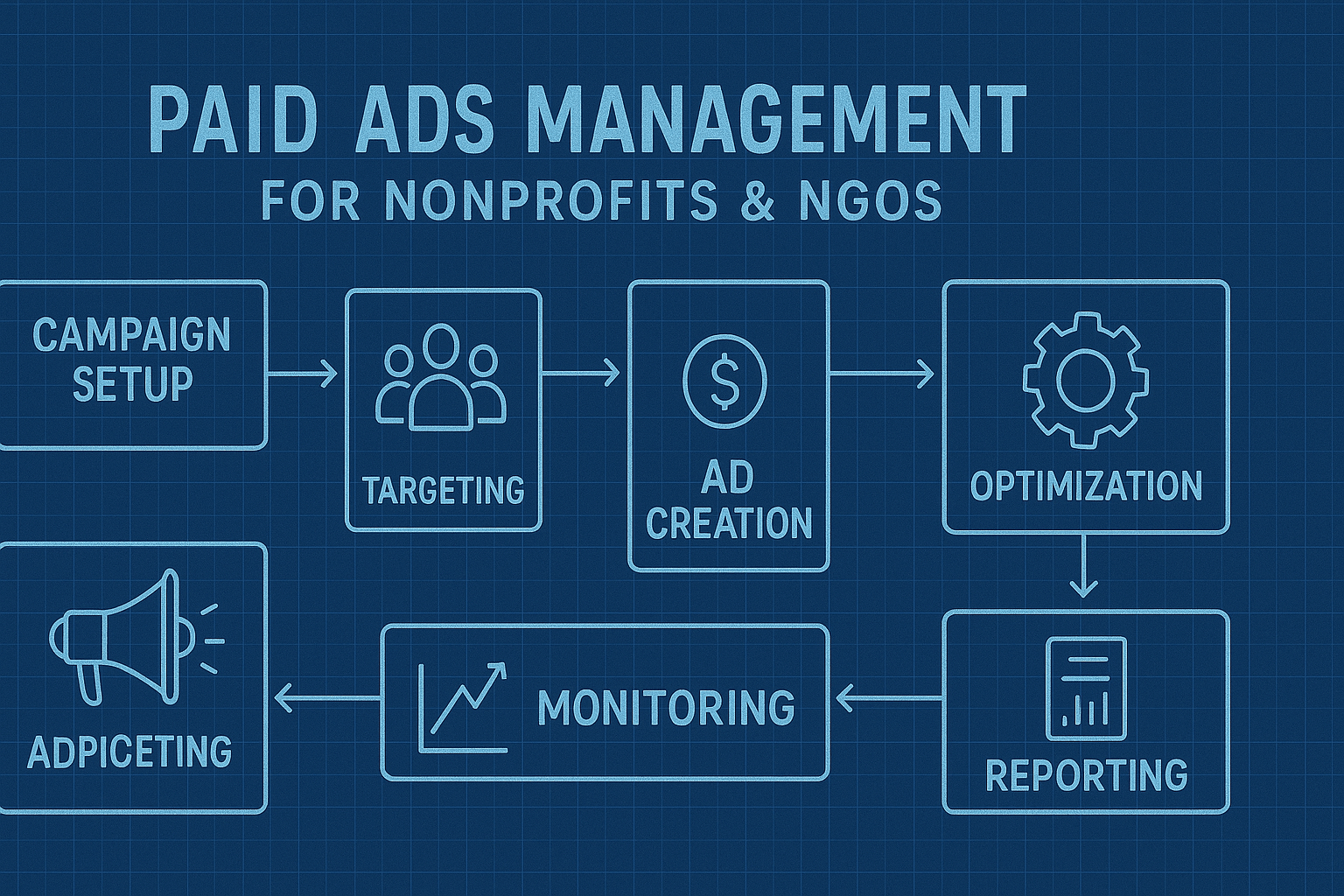
Why Paid Ads Management Matters for Nonprofits & NGOs
The nonprofit sector faces unique marketing challenges that commercial businesses rarely encounter. Limited budgets, donor fatigue, increasing competition for charitable dollars, and the imperative to demonstrate measurable impact create an environment where every marketing decision carries significant weight. Traditional fundraising methods—direct mail, gala events, and grassroots outreach—remain valuable but insufficient in reaching digitally-native donors and younger demographics who increasingly discover and support causes online.
Paid advertising levels the playing field by providing access to sophisticated targeting tools previously available only to major corporations. Google Ad Grants offer eligible nonprofits up to $10,000 monthly in free search advertising, while social platforms provide detailed audience segmentation based on interests, behaviors, and causes supporters already engage with. This precision targeting means your message reaches individuals predisposed to care about your mission rather than broadcasting blindly and hoping for resonance.
Beyond reach, paid ads deliver accountability through granular performance tracking. You can measure exactly how many people saw your campaign, which messages drove donations, what your cost per acquisition looks like, and how donor lifetime value compares across channels. This data empowers evidence-based decision-making and helps demonstrate marketing ROI to board members and major donors who rightfully demand transparency.
The Core Components of Effective Nonprofit Advertising
Strategic paid ads management for nonprofits encompasses several interconnected elements:
- Account Architecture: Properly structured campaigns organized by audience segment, campaign goal, and donor journey stage enable precise budget allocation and performance optimization.
- Creative Testing Framework: Systematic experimentation with messaging, imagery, calls-to-action, and emotional appeals identifies what resonates most powerfully with your target supporters.
- Audience Development: Building and refining custom audiences based on donor behavior, engagement history, lookalike modeling, and interest targeting ensures your message reaches high-potential prospects.
- Conversion Optimization: Continuous refinement of landing pages, donation forms, and user experience reduces friction and maximizes the percentage of clicks that convert into meaningful actions.
- Budget Management: Strategic allocation across platforms, campaigns, and timeframes ensures resources focus on highest-performing initiatives while maintaining presence across the full donor funnel.
Strategic Framework: Building High-Performance Campaigns
Effective paid advertising for nonprofits requires methodical planning and execution. The framework below provides a proven roadmap from initial strategy through ongoing optimization, ensuring every campaign launches with clear objectives and measurement plans.
Phase 1: Discovery & Strategic Foundation
Success begins with clarity. Before launching any campaign, establish concrete answers to foundational questions: What specific outcomes define success? Who are your ideal donors and volunteers? What constraints—budget, timing, capacity—shape your approach? This discovery phase examines your existing donor data, analyzes competitive positioning, and identifies opportunities where paid advertising can create the greatest impact.
During discovery, we audit your current digital presence, donation pathways, and conversion points. We analyze historical campaign performance to understand what messaging has resonated, identify seasonal patterns in giving behavior, and pinpoint bottlenecks in your supporter journey. This intelligence informs everything that follows, ensuring campaigns align with organizational capacity and donor expectations.
Phase 2: Blueprint Development
With strategic foundations established, we design the campaign architecture. This blueprint specifies platform selection (Google Grants, Facebook/Instagram, LinkedIn, programmatic display), audience segmentation strategy, creative concepts aligned to donor personas, and the measurement framework that will guide optimization decisions. The blueprint serves as your campaign roadmap—defining budget allocation, testing priorities, and success metrics before any ads go live.
Key blueprint components include: a campaign calendar synchronized with your fundraising calendar and awareness initiatives; a creative testing matrix that systematically evaluates different hooks, emotional appeals, and calls-to-action; an audience strategy that segments by donor potential, engagement history, and affinity indicators; and a measurement plan connecting ad performance to organizational goals like donor acquisition cost, lifetime value, and program funding requirements.
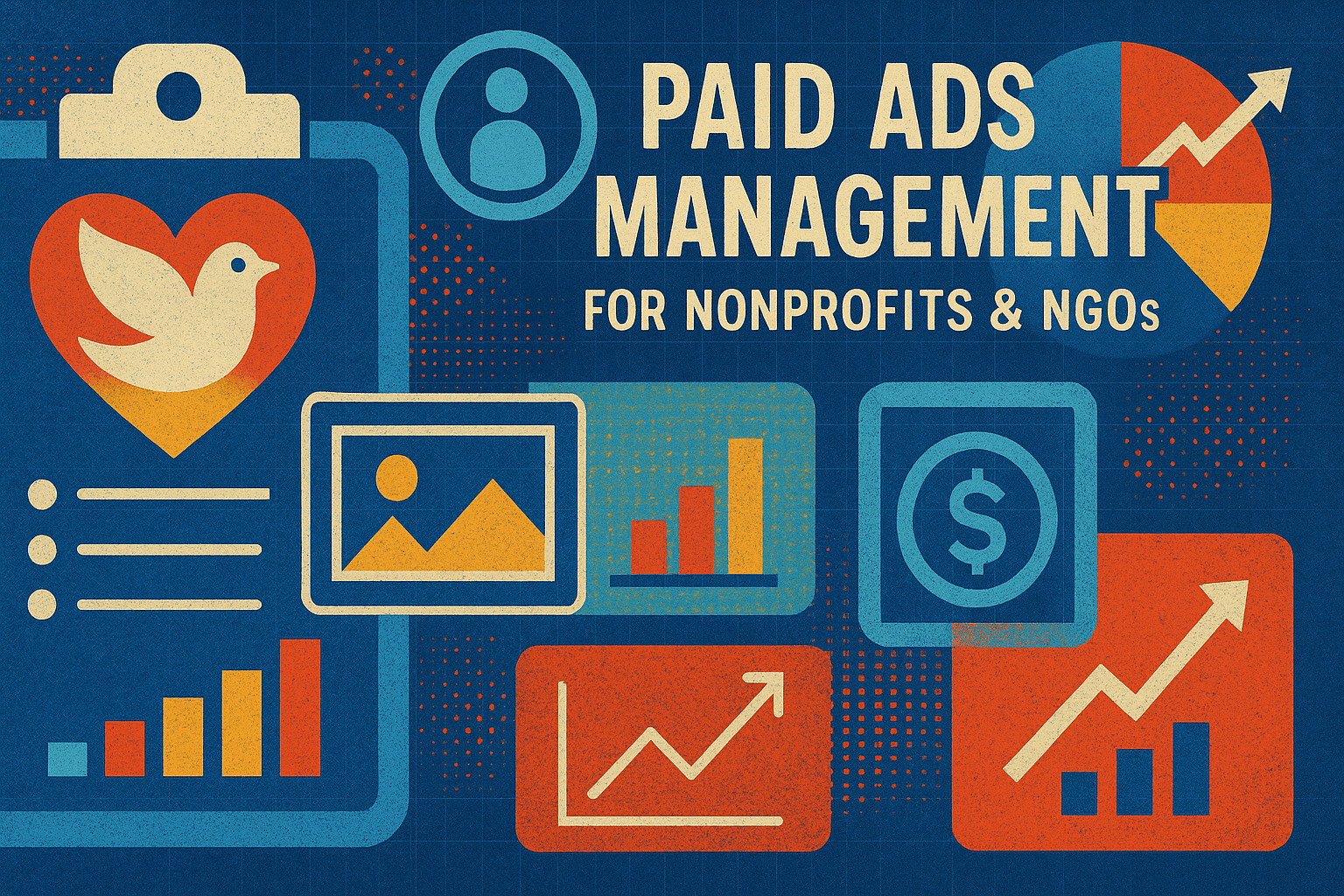
Phase 3: Build & Launch
Implementation transforms strategy into reality. Campaign build includes account setup with proper conversion tracking, creating ad groups organized by audience and intent, developing creative assets that tell your story compellingly, and configuring landing pages optimized for donation conversions. Quality assurance testing ensures tracking fires correctly, links function properly, and donor experience flows smoothly from initial click through completed donation.
Launch begins with controlled testing—modest budgets that allow performance validation before scaling. Initial campaigns focus on proven audience segments and messaging approaches while establishing baseline performance metrics. This measured approach minimizes risk and generates learnings that inform subsequent optimization and expansion efforts.
Phase 4: Optimize & Scale
The real work begins post-launch. Continuous optimization analyzes performance data to identify winning combinations of audience, creative, and messaging while eliminating underperformers. Winning campaigns receive increased budget allocation; underperformers are refined or paused. This iterative approach compounds improvements over time, driving cost per acquisition down while increasing donor quality and lifetime value.
Optimization extends beyond ads themselves to encompass the entire conversion pathway. Landing page testing refines messaging hierarchy, donation form improvements reduce abandonment, and follow-up sequences nurture new donors toward sustained engagement. The goal isn't just acquiring donors—it's acquiring the right donors who remain engaged and increase their support over time.
Platform Strategy: Choosing the Right Channels
Each advertising platform offers distinct advantages for nonprofit organizations. Strategic channel selection matches your goals, audience, and resources to platforms most likely to deliver results.
Google Ad Grants: The Foundation
For eligible nonprofits, Google Ad Grants provides $10,000 monthly in free search advertising—an extraordinary opportunity to capture high-intent traffic from people actively researching causes, donation opportunities, and volunteer positions. Grant programs require maintaining minimum performance thresholds (5% click-through rate, account activity, conversion tracking), but when managed properly, deliver highly qualified traffic at zero media cost.
Effective Grant management focuses on branded terms, cause-specific keywords, and location-based searches. Campaigns target individuals with clear intent—searching for ways to support specific causes, researching nonprofit options, or seeking volunteer opportunities. Because grants cover search ads only, complement with modest paid social budgets for awareness and retargeting.
Facebook & Instagram: Storytelling at Scale
Meta's platforms excel at emotional storytelling and audience building. Visual content showcasing program impact, beneficiary stories, and mission outcomes performs exceptionally well, particularly when targeting custom audiences based on engagement with your page, website visitors, and lookalike audiences modeled from existing donors.
Facebook's detailed targeting enables reaching users based on interests, behaviors, and demographic attributes aligned with your cause. Environmental nonprofits can target sustainability-minded individuals; animal welfare organizations reach pet owners and animal rights advocates; humanitarian NGOs connect with socially conscious audiences. Video content, particularly short-form storytelling that communicates impact quickly, drives highest engagement and sharing.
LinkedIn: Reaching Corporate Partners
For NGOs focused on corporate partnerships, CSR initiatives, or B2B relationships, LinkedIn provides access to decision-makers and influence-holders. Campaigns targeting by job function, seniority, and company size effectively reach corporate giving managers, foundation directors, and executives with partnership decision authority.
LinkedIn advertising costs more per click than other platforms but delivers higher-quality leads when targeting corporate engagement. Use for promoting sponsorship opportunities, volunteer programs suitable for corporate teams, and thought leadership content that positions your organization as an expert in your cause area.
Creative Strategy: Messaging That Moves Donors
Compelling creative separates campaigns that inspire action from those that scroll past unnoticed. Effective nonprofit advertising balances emotional appeal with concrete impact demonstration, showing both the urgency of need and the tangible difference donor support creates.
Emotional Resonance With Rational Support
Leading with emotion creates connection; supporting with facts builds credibility. Donors respond to stories that illustrate individual impact—the child who gained access to education, the family who received clean water, the animal rescued from harm. But emotional appeals alone aren't enough; supporters also want assurance their dollars create measurable change. Pair compelling visuals and narrative with specific outcome metrics: 'Your $50 provides clean water for a family of five for one year' translates abstract generosity into concrete impact.
Testing Framework
Systematic creative testing identifies what resonates most powerfully with your audience. Test variables include:
- Emotional Appeal: Hope vs. urgency, positive outcomes vs. problem awareness, individual stories vs. collective impact
- Visual Style: Photography vs. illustration, beneficiary focus vs. program activity, brand-centric vs. mission-centric
- Call-to-Action: Donate now vs. learn more, monthly giving vs. one-time gift, specific amounts vs. open contribution
- Message Framing: What your support provides vs. what lack of support costs, donor benefit vs. beneficiary impact, urgency-driven vs. aspiration-driven
Start with broader variations testing fundamentally different approaches, then narrow to tactical refinements of winning concepts. Document learnings to inform future campaigns and build institutional knowledge about what messaging drives response.
Measurement & Optimization: Proving Impact
What gets measured gets improved. Comprehensive measurement frameworks track not just advertising metrics but business outcomes—donor acquisition, retention, lifetime value, and ultimately, program funding generated through marketing efforts.
Key Performance Indicators
Effective measurement tracks metrics across three levels:
- Campaign Metrics: Impressions, reach, click-through rate, cost per click—indicators of campaign delivery and audience engagement with your messaging.
- Conversion Metrics: Conversion rate, cost per acquisition, donation size, form completion rate—measurements of how effectively campaigns drive desired actions.
- Business Metrics: Donor lifetime value, retention rate, program funding attributed to paid acquisition, blended CAC across all marketing—ultimate indicators of marketing effectiveness and organizational impact.
Report on all three levels, connecting advertising activity to organizational goals. This multi-level view helps stakeholders understand both immediate campaign performance and longer-term strategic value.
Attribution Challenges & Solutions
Donor journeys rarely follow simple paths. A supporter might see your Facebook ad, visit your website days later via organic search, attend an event the following month, then finally donate after receiving an email appeal. Multi-touch attribution models provide more accurate understanding of how various touchpoints contribute to conversion, helping you value awareness-building activities alongside last-click conversions.
While perfect attribution remains elusive, implement conversion tracking across all platforms, use UTM parameters consistently for traffic source identification, and maintain a single source of truth dashboard that aggregates data from all channels. Even imperfect measurement enables directional decision-making and continuous improvement.
Budget Optimization: Maximizing Limited Resources
Nonprofits must extract maximum value from constrained marketing budgets. Strategic allocation and continuous rebalancing ensure resources flow toward highest-performing initiatives while maintaining necessary presence across the full donor journey.
Allocation Strategy
Effective budget management balances three priorities: proven performers that deliver consistent results deserve majority allocation; testing budget for experimentation with new audiences, messages, and platforms; and strategic maintenance of brand presence and remarketing to engaged audiences. A common framework allocates 70% to proven tactics, 20% to optimization testing, and 10% to experimental initiatives.
Align spending with donor journey stages—awareness campaigns that introduce your cause to new audiences, consideration content that builds credibility and emotional connection, and conversion campaigns that drive immediate action. Early-stage audiences require different messaging and different success metrics than warm audiences already familiar with your work.
Seasonal & Campaign-Based Pacing
Nonprofit giving follows predictable patterns—end-of-year giving surges, Giving Tuesday peaks, spring/fall event seasons, and cause-specific awareness months. Budget pacing should reflect these patterns, increasing spend during high-intent periods when donors are primed to give while maintaining baseline presence during slower periods to nurture ongoing relationships.
Major campaigns—capital campaigns, urgent relief efforts, annual fund drives—warrant temporary budget increases to maximize impact during defined windows. Build campaign-specific budgets separate from ongoing acquisition and retention efforts, with clear success metrics that justify the investment.
Industry-Specific Considerations for Nonprofits & NGOs
The nonprofit sector encompasses enormous diversity—from local community organizations to global NGOs, from direct service providers to advocacy groups. While core advertising principles remain consistent, implementation details vary significantly based on organizational focus and operational model.
Audience Segmentation by Cause Affinity
Donors often support causes aligned with personal experience, values, or identity. Environmental organizations reach sustainability-conscious consumers and outdoor enthusiasts; health-focused nonprofits connect with individuals personally affected by specific conditions; educational charities resonate with parents, teachers, and students. Segment audiences by psychographic and behavioral indicators of cause affinity, not just demographics.
Use platform targeting tools to identify high-affinity audiences: interest targeting for cause-related topics, engagement-based targeting for users who interact with similar organizations, and lookalike modeling from your existing donor base to find others with similar characteristics.
Leveraging Social Proof
Trust is fundamental to nonprofit success. Donors need confidence their contributions will be used effectively and create genuine impact. Incorporate social proof throughout campaigns—donor testimonials, program outcome statistics, awards and recognition, partnership with respected institutions, and transparency about fund allocation. Display charity navigator ratings, Guidestar seals, and financial efficiency metrics prominently.
User-generated content from beneficiaries, volunteers, and donors provides authentic validation more powerful than organizational messaging. Encourage supporters to share their experiences and motivations, then amplify these stories through paid promotion.
Regulatory Compliance & Platform Policies
Nonprofit advertising must navigate platform-specific policies around fundraising, charitable solicitations, and political advocacy. Maintain tax-exempt status documentation, clearly identify your organization as a registered nonprofit, and ensure landing pages include required disclosures about tax deductibility and fund usage.
Advocacy campaigns face additional scrutiny and restrictions, particularly around election-related content. Familiarize yourself with policies governing issue advocacy, lobbying, and political activity to ensure compliance while exercising your organization's voice on issues central to your mission.
Advanced Tactics: Scaling What Works
Once foundational campaigns demonstrate consistent performance, advanced tactics amplify results and efficiency.
Monthly Giving Programs
Recurring donors provide predictable revenue streams and exhibit much higher lifetime value than one-time givers. Dedicate campaigns specifically to monthly giving acquisition, emphasizing the sustained impact of regular support. Test messaging that frames monthly giving as membership, partnership, or joining a community of committed supporters rather than simply recurring transactions.
Monthly donor acquisition typically costs more upfront but pays back through extended retention. Calculate break-even timeframes and optimize toward donor quality metrics—retention rate, average monthly gift size, upgrade propensity—rather than pure acquisition cost.
Retargeting & Nurture Sequences
Most visitors won't donate on first exposure. Retargeting campaigns re-engage website visitors, video viewers, and email openers with additional touchpoints that build familiarity and trust. Sequence retargeting messages to provide progressive value—educational content first, impact stories next, then specific donation appeals.
Segment retargeting by engagement level: high-intent visitors who reached donation pages receive immediate conversion-focused messaging; casual browsers see awareness and education content; email subscribers receive complementary messages that reinforce email themes across paid channels.
Lookalike Audience Expansion
Lookalike audiences leverage platform algorithms to identify new prospects with characteristics similar to your best existing donors. Build source audiences from high-value segments—multi-year donors, monthly givers, major donors, highly engaged volunteers—then let platforms identify similar users at scale.
Test lookalike audiences at varying similarity percentages: tighter matches (1-2% lookalikes) closely resemble source audiences but limit reach; broader matches (5-10% lookalikes) expand reach but may reduce conversion rates. Monitor both volume and quality metrics to find the optimal balance for your organization.
Common Pitfalls & How to Avoid Them
Even well-intentioned campaigns can falter. Awareness of common mistakes helps you avoid costly missteps.
Neglecting Landing Page Optimization
Driving traffic to generic homepages or poorly optimized donation forms wastes advertising spend. Create dedicated landing pages for each major campaign with messaging continuity from ad to page, streamlined donation forms that reduce friction, and clear impact statements that reinforce why the donor's contribution matters. Test form length, suggested donation amounts, and trust indicators to maximize conversion rates.
Insufficient Testing Budget
Many nonprofits launch a single campaign and hope for the best. Reserve 20% of budget for systematic testing of new audiences, creative approaches, and platforms. Small-scale tests generate learnings that inform larger campaigns, preventing over-investment in unproven tactics while identifying breakthrough opportunities.
Ignoring Donor Lifetime Value
Optimizing purely for lowest cost per acquisition often sacrifices donor quality. A $50 acquisition cost for a donor who gives $100 once is worse than a $100 acquisition cost for a donor who gives $50 monthly for three years. Track retention and lifetime value by acquisition source, optimizing toward long-term value rather than immediate conversion cost alone.
Frequently Asked Questions
Let’s level up your Nonprofits & NGOs business
Need services that actually move the needle for Nonprofits & NGOs? See our approach, pricing, and timelines—then book a quick call.
Additional Resources
- Schedule Your Free Strategy Consultation
Book a 30-minute call to discuss your nonprofit's advertising goals, budget, and how paid campaigns can amplify your mission impact.
- View Our Nonprofit Campaign Portfolio
Explore successful paid advertising campaigns we've created for nonprofits and NGOs across various causes, from donor acquisition to awareness campaigns.
- Access Free Nonprofit Marketing Tools
Download templates, calculators, and planning tools designed specifically for nonprofit marketing teams managing paid advertising campaigns.
Related Reading
Transform your pest control business with expert paid ads management. Get proven strategies, ROI optimization, and lead generation systems that work. ⚡💪
Discover proven paid ads strategies for accounting firms and CPAs. Get actionable campaigns, audience targeting, and conversion optimization to grow your practice profitably.
Expert paid ads management for cleaning companies. Get more qualified leads, lower cost per booking, and measurable ROAS. Proven strategies that convert browsers into customers.