Conversion Rate Optimization for Dermatologists: 7 Proven Strategies to Turn More Visitors Into Booked Appointments
by Eric Barker · October 31, 2025
Smart, fast, and measurable. Here's how conversion rate optimization helps Dermatologists win.
Your dermatology practice's website attracts hundreds or even thousands of visitors each month, but how many of those visitors actually book appointments? If you're spending money on digital advertising, SEO, or content marketing without optimizing your conversion funnel, you're essentially pouring water into a leaky bucket. Conversion rate optimization (CRO) for dermatologists bridges the gap between traffic and revenue by systematically improving the percentage of visitors who take desired actions—whether that's booking a consultation, calling your office, or requesting information about specific treatments.
The dermatology market is increasingly competitive, with patients researching multiple providers before making decisions. They compare credentials, read reviews, evaluate before-and-after photos, and assess whether your practice offers the specific treatments they need. In this environment, even small improvements in conversion rates translate to significant revenue gains. A practice converting 2% of website visitors into booked appointments that increases to 3% has essentially grown their patient acquisition by 50% without spending an additional dollar on marketing. This is why leading dermatology practices are investing in data-driven CRO strategies that eliminate friction, build trust, and guide prospective patients smoothly from first click to confirmed appointment.
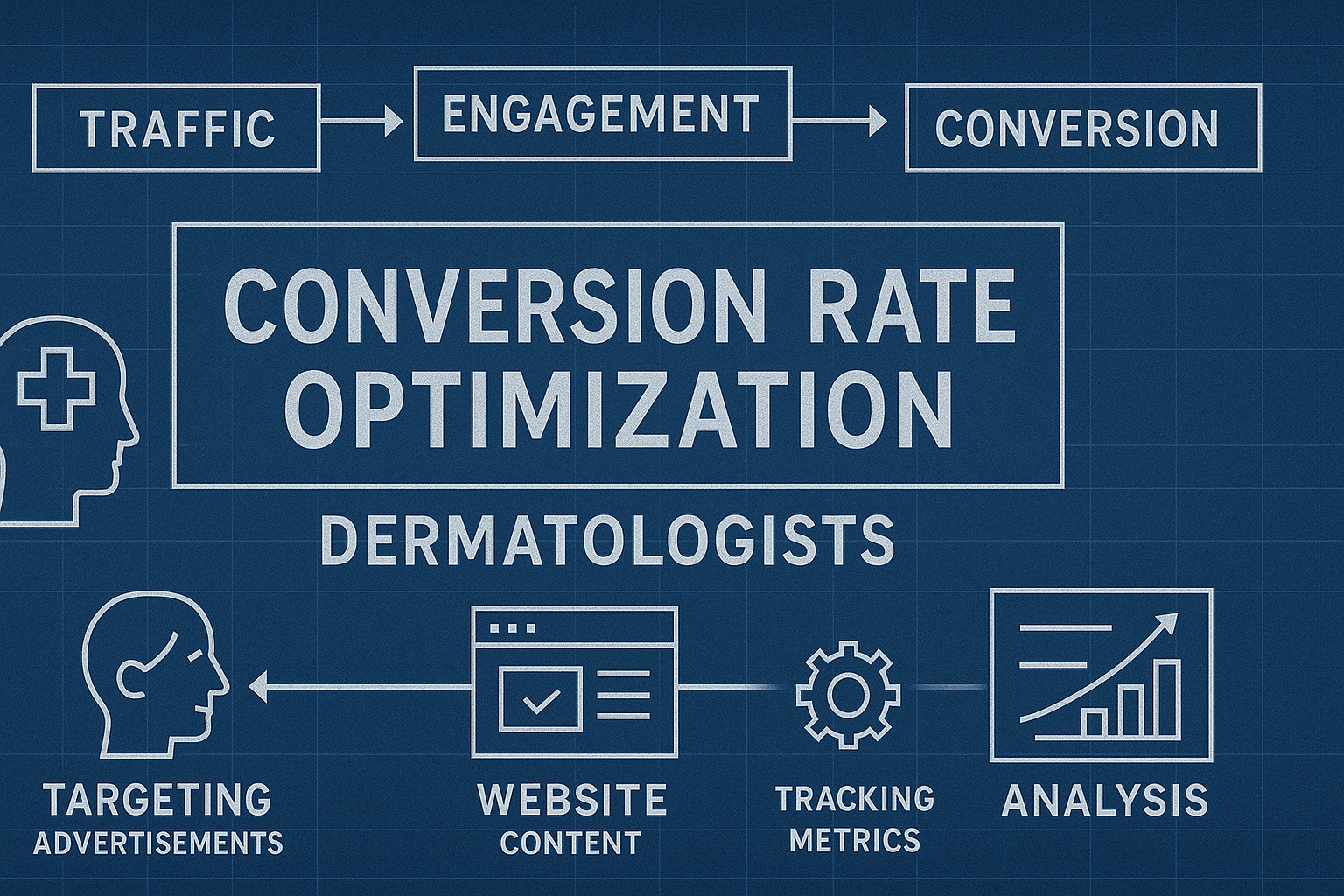
Why Conversion Rate Optimization Matters for Dermatology Practices
Dermatology practices face unique challenges in the digital landscape. Patients seeking cosmetic procedures research extensively before committing, while those with medical concerns need reassurance about expertise and care quality. Your website must serve both audiences effectively, addressing cosmetic patients' aesthetic goals and medical patients' health concerns with equal competence.
Traditional marketing metrics like page views and session duration don't directly correlate with business growth. What matters is conversion velocity—how quickly and efficiently you turn anonymous visitors into identified leads and booked patients. Consider these realities:
- High acquisition costs: Google Ads for dermatology keywords can cost $15-$75 per click in competitive markets
- Complex decision journeys: Patients visit 3-5 websites before choosing a provider, creating multiple opportunities to lose them
- Treatment diversity: From acne treatment to Botox to skin cancer screenings, each service requires tailored messaging and conversion paths
- Trust barriers: Medical decisions require higher trust thresholds than typical e-commerce transactions
CRO addresses these challenges by creating frictionless pathways that match patient intent with the right information, social proof, and conversion opportunities. Rather than hoping visitors stumble upon your booking form, you strategically guide them through a journey that builds confidence and removes obstacles to action.
The 7 Core Plays for Dermatology CRO Success
Effective conversion rate optimization for dermatologists isn't about random tweaks or copying competitor websites. It's a systematic approach to understanding visitor behavior, identifying bottlenecks, and implementing targeted improvements. These seven plays form the foundation of a high-converting dermatology website.
Play 1: Intent-Based Landing Page Optimization
Every traffic source brings visitors with different intents and awareness levels. Someone clicking a Google Ad for "Botox near me" has immediate purchase intent, while someone reading a blog post about acne treatments is earlier in the research phase. Your landing pages must align with these distinct intents.
High-converting dermatology landing pages include:
- Headline-offer alignment: Your headline should echo the visitor's search query or ad copy they clicked
- Above-the-fold clarity: Visitors should understand what you offer and what action to take within 3 seconds
- Treatment-specific content: Generic "dermatology services" pages convert poorly; create dedicated pages for Botox, fillers, acne treatment, mole removal, etc.
- Visual proof: Before-and-after galleries, provider credentials, and facility photos build immediate credibility
- Single primary CTA: Don't dilute conversion opportunities with multiple competing calls-to-action
Test variations of your primary conversion element—the button text, form length, and surrounding copy. Small changes like "Book Free Consultation" versus "Schedule My Visit" can yield 15-30% conversion rate differences.
Play 2: Trust Signal Optimization
Dermatology involves medical expertise and aesthetic outcomes—two areas where trust is non-negotiable. Strategic placement of trust signals throughout your conversion funnel reduces hesitation and accelerates decisions.
Implement these trust elements:
- Provider credentials: Board certification, years of experience, and specialized training should be visible on key pages
- Patient testimonials with specificity: "Dr. Smith removed my mole painlessly" outperforms generic "great service" reviews
- Before-and-after galleries: Organize by treatment type and include timelines ("3 months post-procedure")
- Media mentions and awards: "Featured in [Publication]" or "Top Dermatologist 2024" badges
- Association logos: American Academy of Dermatology, state medical boards, etc.
- Security and privacy assurances: HIPAA compliance statements near contact forms
Position trust signals adjacent to conversion points. Place a testimonial carousel above your booking form, or display provider credentials next to treatment pricing.
Play 3: Friction Reduction in Booking Flows
Every additional field in a contact form, every extra page in the booking process, and every unclear instruction increases abandonment rates. Ruthlessly eliminate unnecessary friction.
Analyze your current booking flow:
- Form field audit: Does your contact form really need mailing address for an initial consultation request? Reduce to essential fields only
- Mobile optimization: 60-70% of dermatology website traffic comes from mobile devices; ensure forms work flawlessly on small screens
- Click-to-call prominence: Mobile visitors often prefer calling; make phone numbers tappable and visible
- Calendar integration: Real-time appointment scheduling beats contact form submission that requires staff follow-up
- Progress indicators: If your booking process has multiple steps, show progress ("Step 2 of 3")
Use session recording tools to watch real visitors navigate your booking process. You'll quickly identify where people hesitate, backtrack, or abandon.
Play 4: Service-Specific Conversion Paths
A website visitor researching Botox has different questions and concerns than someone seeking acne treatment or mole removal. Generic conversion funnels underperform because they fail to address service-specific objections and interests.
Create tailored paths for your top services:
- Cosmetic procedures: Emphasize results, recovery time, pricing transparency, and provider artistry
- Medical treatments: Focus on expertise, insurance acceptance, diagnostic capabilities, and successful treatment rates
- Preventive care: Highlight comprehensive exams, early detection, and long-term skin health
Each service page should have its own conversion strategy. Cosmetic patients might respond to "View Botox Results Gallery" CTAs, while medical patients need "Check Insurance Coverage" or "Find Available Appointments" options.
Play 5: Data-Driven A/B Testing
Opinions about what works vary; data reveals truth. Systematic A/B testing removes guesswork from optimization by comparing variations and measuring actual performance.
Priority testing areas for dermatologists:
- CTA button copy: Test action-oriented vs. benefit-oriented text ("Book Now" vs. "Get Clearer Skin")
- Form length: Compare 3-field forms against 6-field forms to find optimal balance between conversion rate and lead quality
- Offer positioning: Test free consultation offers vs. special pricing vs. no specific offer
- Social proof placement: Experiment with testimonial locations—hero section, above booking form, or dedicated page
- Image selection: Test treatment result photos vs. facility images vs. provider photos
Run tests until you achieve statistical significance (typically 95% confidence). Small sample sizes produce unreliable results, so be patient and let data accumulate.
Play 6: Behavioral Targeting and Personalization
Not all visitors deserve identical experiences. Smart personalization shows different content, offers, and CTAs based on visitor source, behavior, and demographics.
Implement these personalization strategies:
- Geographic customization: Display nearest location and local phone number based on IP address
- Traffic source targeting: Show different messaging to paid search visitors vs. organic visitors vs. social media traffic
- Return visitor recognition: If someone viewed your Botox page previously, greet them with a Botox-specific offer on return
- Time-based urgency: "3 appointments available this week" creates scarcity without false pressure
- Device-specific optimization: Mobile visitors see click-to-call options prominently; desktop visitors see detailed form options
Start simple with 2-3 segments, then expand as you gather data about which personalization strategies produce the highest lift.
Play 7: Post-Conversion Optimization
Conversion optimization doesn't end when someone submits a form. The experience after initial contact significantly impacts show rates and lifetime value.
Optimize post-conversion touchpoints:
- Immediate confirmation: Show a thank-you page with clear next steps, expected response time, and what to bring
- Automated email sequence: Send confirmation email immediately, followed by appointment preparation details
- SMS reminders: Text message reminders reduce no-shows by 30-40%
- Pre-appointment education: Send treatment guides, FAQs, or provider bios to build excitement and reduce cancellations
- Feedback loops: Ask new patients how they found you to optimize budget allocation
Track not just form submissions but actual kept appointments and patient lifetime value. A high conversion rate means little if patients don't show up.
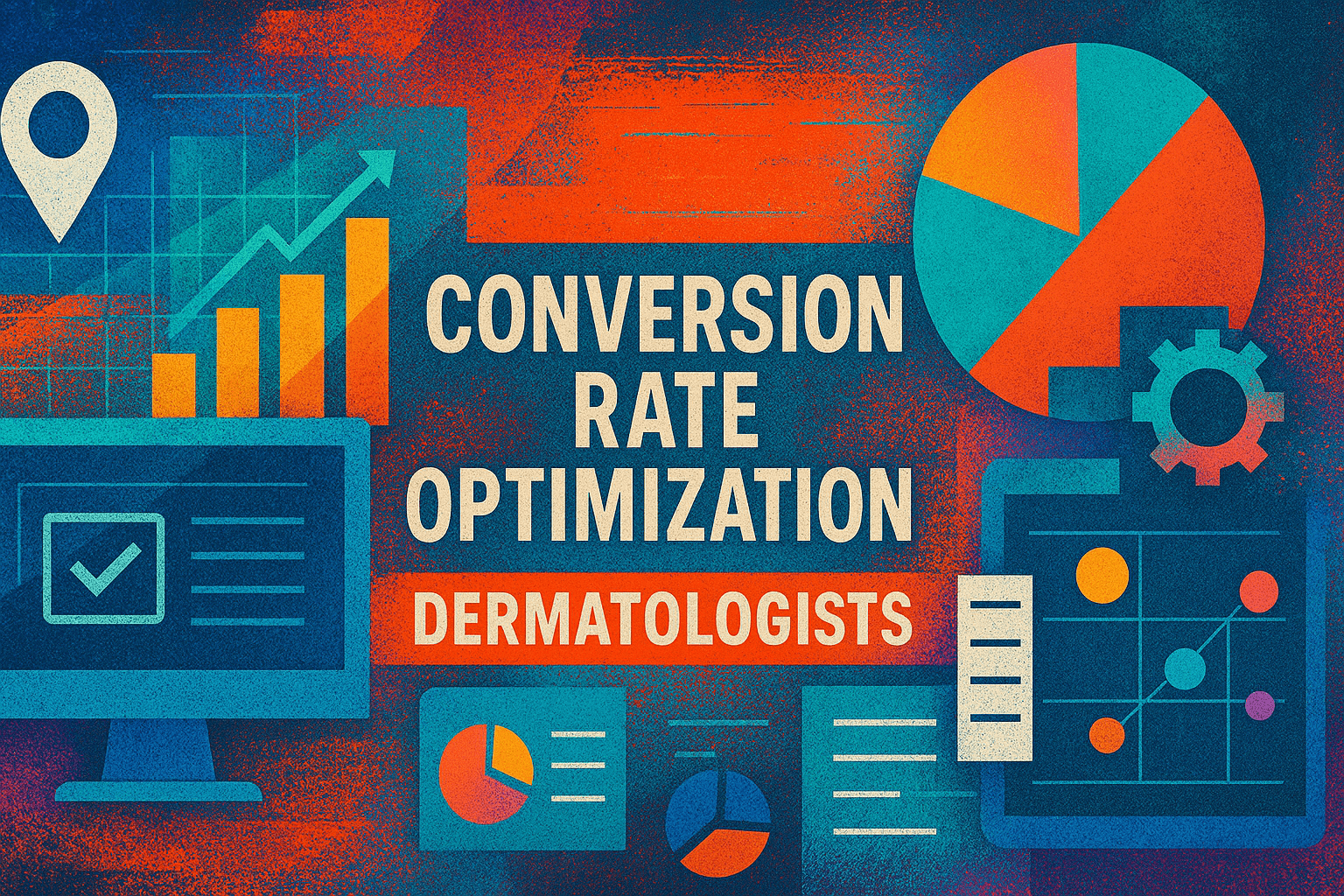
Implementation Framework: From Strategy to Results
Understanding CRO principles and actually implementing them are different challenges. This framework provides a step-by-step roadmap from initial analysis to scaled optimization.
Phase 1: Discovery and Baseline Establishment
Before making changes, you need clear baseline metrics and understanding of current performance.
Key activities:
- Install comprehensive analytics (Google Analytics 4, heatmapping tools, session recording)
- Define conversion goals (appointment bookings, calls, form submissions, chat initiations)
- Audit existing conversion paths and identify drop-off points
- Survey recent patients about their decision-making process
- Analyze competitor websites for conversion best practices
- Document current conversion rates by traffic source and page
Deliverables: Analytics dashboard, conversion funnel visualization, prioritized opportunity list
Timeline: 1-2 weeks
Phase 2: Strategy and Hypothesis Development
Data analysis reveals problems; strategy development creates solutions.
Key activities:
- Prioritize opportunities using impact/effort matrix (quick wins vs. long-term projects)
- Develop hypotheses for each optimization ("We believe that adding before-and-after photos above the booking form will increase conversions by 20% because visitors need visual proof before committing")
- Create wireframes and designs for proposed changes
- Map implementation dependencies and technical requirements
- Establish success metrics and measurement plan for each test
Deliverables: Experimentation roadmap, design mockups, measurement framework
Timeline: 1-2 weeks
Phase 3: Implementation and Testing
Execute planned optimizations with proper testing methodology.
Key activities:
- Build test variations (A/B tests, multivariate tests)
- Implement changes on staging environment first
- QA all variations across devices and browsers
- Launch tests with proper traffic allocation
- Monitor tests daily for technical issues or unexpected results
- Run tests to statistical significance before declaring winners
Deliverables: Live A/B tests, performance monitoring dashboard, interim results reports
Timeline: 2-4 weeks per test cycle
Phase 4: Analysis and Iteration
Data without insights is noise; analysis turns data into action.
Key activities:
- Analyze test results for statistical and practical significance
- Document learnings from both winners and losers
- Implement winning variations permanently
- Develop follow-up hypotheses based on results
- Scale successful tactics across similar pages/services
- Report results to stakeholders with clear ROI calculations
Deliverables: Test results documentation, optimization playbook, next-cycle roadmap
Timeline: Ongoing, with formal reviews every 4-6 weeks
Essential Metrics and KPIs for Dermatology CRO
You can't optimize what you don't measure. These metrics provide comprehensive visibility into conversion performance and optimization impact.
Primary Conversion Metrics
- Overall conversion rate: Percentage of visitors who complete any goal action (benchmark: 2-5% for dermatology)
- Appointment booking rate: Visitors who successfully schedule appointments (top priority metric)
- Phone call conversion rate: Click-to-call actions and inbound calls attributed to website
- Form submission rate: Contact form completions per page visitor
- Chat engagement rate: Percentage of visitors who initiate live chat or chatbot conversations
Supporting Engagement Metrics
- Bounce rate by page: Single-page visits indicate poor relevance or messaging (target: under 50%)
- Time on key pages: Treatment pages should hold attention 2-3+ minutes
- Page depth: Number of pages viewed per session (higher indicates engagement)
- Scroll depth: Percentage of page content viewed (identifies if key CTAs are seen)
- Exit rate from conversion pages: Where visitors leave before converting
Business Impact Metrics
- Cost per acquisition: Marketing spend divided by new patients acquired
- Patient lifetime value: Average revenue per patient over their relationship with your practice
- Show rate: Percentage of booked appointments that patients actually attend
- Revenue per visitor: Total patient revenue divided by website traffic
- Return on ad spend: Revenue attributed to advertising divided by ad spend
Technical Performance Metrics
- Page load speed: Time until interactive (target: under 3 seconds)
- Mobile responsiveness score: Google's mobile-friendly test results
- Form error rate: Percentage of form submissions that fail
- Cross-device tracking accuracy: Ability to follow patient journeys across devices
Create a dashboard that displays these metrics at a glance, with weekly reporting and monthly deep-dives to identify trends and opportunities.
Dermatology-Specific Conversion Strategies
While general CRO principles apply universally, dermatology practices benefit from industry-specific tactics that address unique patient behaviors and concerns.
Treatment Category Optimization
Different dermatology services require different conversion approaches:
Cosmetic Procedures (Botox, Fillers, Laser Treatments):
- Lead with dramatic before-and-after galleries
- Emphasize provider artistry and aesthetic judgment
- Include transparent pricing or price ranges
- Offer virtual consultations to lower initial commitment
- Highlight special offers or package deals
- Use urgency carefully ("limited availability" vs. false pressure)
Medical Dermatology (Acne, Eczema, Psoriasis):
- Focus on expertise, training, and success rates
- Address insurance questions prominently
- Provide educational content that builds authority
- Emphasize comprehensive diagnostic approach
- Include testimonials about treatment effectiveness
- Make appointment scheduling frictionless
Surgical Procedures (Mole Removal, Skin Cancer Treatment):
- Highlight board certification and surgical experience
- Address safety concerns and recovery expectations
- Explain the treatment process step-by-step
- Provide clear information about scarring and outcomes
- Offer easy pathways to urgent consultations
Seasonal Optimization Opportunities
Patient demand fluctuates seasonally; adjust your conversion strategy accordingly:
- Winter months: Promote cosmetic procedures with hidden recovery time, laser treatments, chemical peels
- Spring/Summer: Emphasize sun damage prevention, skin cancer screenings, pre-vacation treatments
- Wedding season: Target brides and wedding parties with special packages
- Back-to-school: Focus on teen acne treatments and pediatric dermatology
Local Market Positioning
Geographic targeting improves relevance and conversion rates:
- Create location-specific landing pages with unique content
- Include local landmarks and neighborhood names in copy
- Display driving directions and parking information prominently
- Showcase community involvement and local partnerships
- Optimize for "near me" and city-specific searches
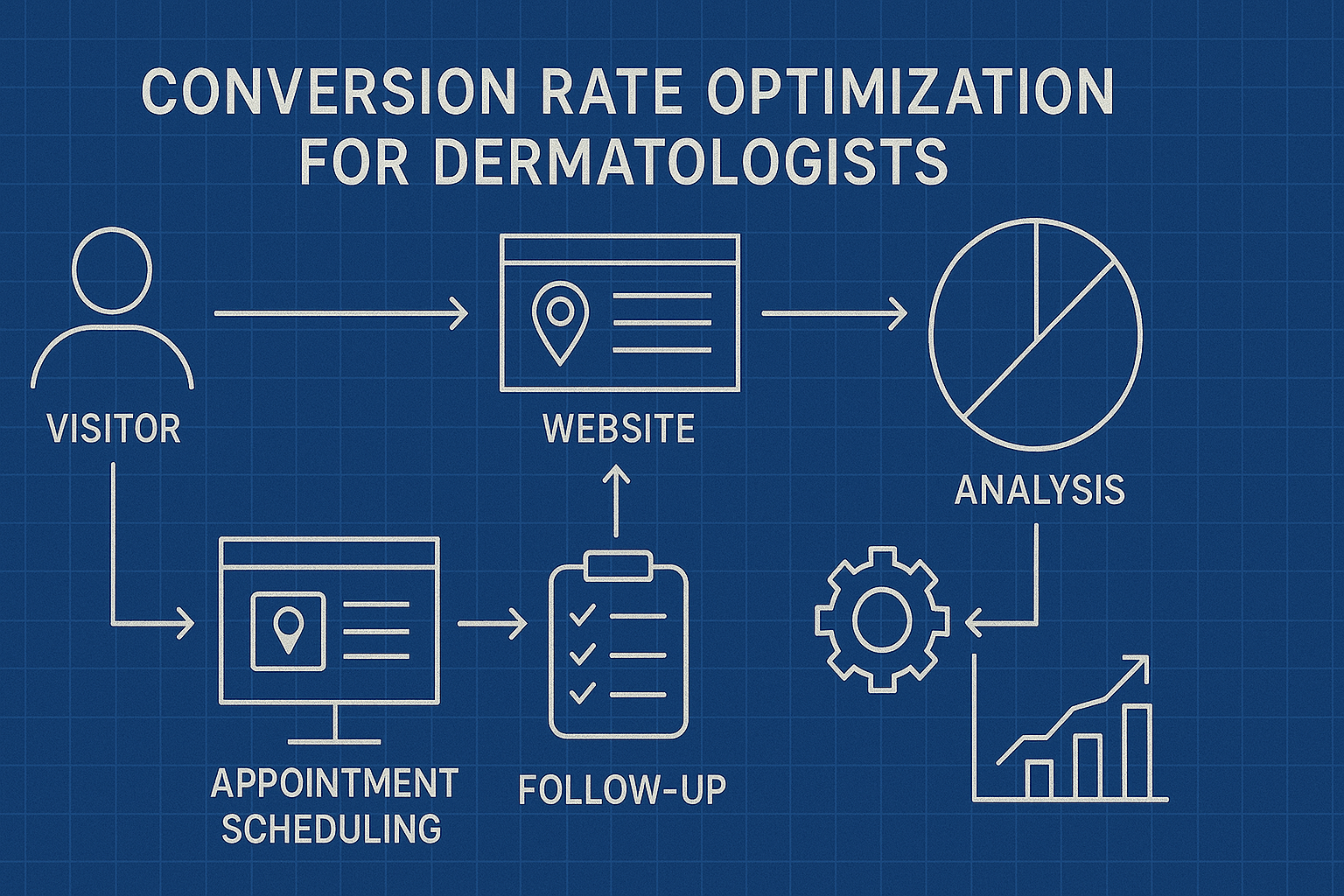
Common CRO Mistakes Dermatologists Make
Even well-intentioned optimization efforts can backfire. Avoid these frequent pitfalls that undermine conversion performance.
Mistake 1: Optimization Without Data
Making changes based on gut feeling or copying competitors leads to wasted effort. Always establish baseline metrics, form clear hypotheses, and measure results systematically. If you can't measure it, you can't optimize it.
Mistake 2: Testing Too Many Variables Simultaneously
Changing your headline, images, form fields, and CTA button all at once makes it impossible to know which change drove results. Test one variable at a time, or use proper multivariate testing methodology if you have sufficient traffic.
Mistake 3: Stopping Tests Too Early
A variation that performs well on day one might underperform by week three. Run tests until you achieve statistical significance (typically 95% confidence), which usually requires several weeks and hundreds of conversions per variation.
Mistake 4: Ignoring Mobile Experience
Desktop optimization doesn't automatically translate to mobile. Test all changes on smartphones and tablets, ensuring touch targets are large enough, forms work smoothly, and page load times are fast on cellular connections.
Mistake 5: Optimizing for the Wrong Goal
Form submissions mean nothing if those leads don't become patients. Optimize for business outcomes (booked appointments, show rates, patient lifetime value) rather than vanity metrics (page views, time on site).
Mistake 6: Neglecting Page Speed
A 1-second delay in page load time can reduce conversions by 7%. Optimize images, minimize scripts, use content delivery networks, and regularly audit technical performance. Speed is a conversion factor, not just an SEO concern.
Mistake 7: Creating Too Much Friction
Every form field, every page in your booking flow, and every unclear instruction creates an opportunity for visitors to abandon. Ruthlessly eliminate unnecessary steps and questions. Ask only what you absolutely need at the initial conversion point.
Advanced CRO Tactics for Competitive Markets
Once you've mastered fundamentals, these advanced strategies provide additional competitive advantages in crowded dermatology markets.
Behavior-Triggered Exit-Intent Campaigns
When visitors move to close your tab or navigate away, trigger targeted messages that address abandonment reasons. For dermatologists, effective exit-intent offers include:
- Free skin analysis or consultation offers
- Downloadable treatment guides or skincare resources
- Special first-visit discounts or package deals
- Calendar showing next-available appointment slots
Keep exit-intent messages relevant and valuable—not desperate. "Wait! Before you go, get your free acne treatment guide" works better than generic "Don't leave!" messages.
Progressive Profiling for Multi-Touch Conversions
Not every visitor is ready to book on their first visit. Capture micro-conversions first, then progressively gather more information:
- First visit: Offer free guide in exchange for email address only
- Return visit: Invite to webinar or virtual consultation, capturing name and phone
- Third visit: Direct booking offer with appointment preference questions
This approach builds your pipeline with visitors at various stages while avoiding overwhelming first-time visitors with lengthy forms.
Dynamic Content Based on Referral Source
Visitors from different sources have different contexts and expectations:
- Instagram/Facebook ads: Show lifestyle-focused imagery and emphasize aesthetic results
- Google search (medical terms): Lead with credentials, expertise, and insurance information
- Google search (cosmetic terms): Highlight before-and-after galleries and special offers
- Referral from review site: Feature more patient testimonials and trust signals
This sophisticated personalization requires marketing automation tools but can produce 20-40% conversion lifts.
Video Integration for Trust and Education
Video humanizes your practice and accelerates trust-building:
- Provider introduction videos: 60-90 second clips where doctors introduce themselves and their philosophy
- Treatment explanation videos: Show what to expect during procedures
- Patient testimonial videos: Real patients sharing their experiences and results
- Facility tours: Reduce anxiety by showing clean, modern treatment environments
Place videos strategically near conversion points. A 90-second provider video above your booking form can increase conversion rates by 15-25%.
Smart Scheduling Integration
Real-time appointment booking removes friction and staff workload:
- Display actual available time slots
- Allow instant booking for new patient consultations
- Send automated confirmation and reminder sequences
- Enable easy rescheduling without calling office
- Sync with your practice management system
Practices that implement online scheduling typically see 30-50% increases in booked appointments because visitors can act immediately rather than planning to call later (and often forgetting).
Building Your CRO Technology Stack
Effective optimization requires the right tools. This technology stack provides comprehensive visibility and testing capabilities.
Essential Tools (Must-Haves)
- Google Analytics 4: Foundational analytics for traffic, behavior, and conversion tracking
- Heatmapping tool: Hotjar, Microsoft Clarity, or similar for visual behavior analysis
- A/B testing platform: Google Optimize (free), VWO, or Optimizely for running experiments
- Call tracking: CallRail or similar to attribute phone conversions to marketing sources
- Form analytics: Track form field interactions and abandonment points
Advanced Tools (High-Impact Additions)
- Session recording: Watch real visitor sessions to identify friction and confusion
- User testing platforms: UserTesting or similar for qualitative feedback on new designs
- Survey tools: Qualaroo or Typeform for on-site feedback collection
- Marketing automation: HubSpot, Marketo, or ActiveCampaign for personalization and nurturing
- Live chat/chatbots: Drift, Intercom, or similar for real-time engagement
Integration Considerations
Your CRO stack must integrate with existing systems:
- Practice management software for appointment syncing
- Email marketing platforms for post-conversion sequences
- CRM systems for lead management and attribution
- Advertising platforms (Google Ads, Facebook Ads) for closed-loop reporting
Plan integrations during tool selection to avoid data silos and manual reporting work.
Scaling CRO Across Multiple Locations
Multi-location dermatology practices face unique challenges in maintaining consistency while optimizing locally.
Centralized Strategy, Localized Execution
Develop core conversion strategies at the enterprise level, then customize for local markets:
- Template approach: Create proven page templates that individual locations can customize with local content
- Shared learning: Implement a system where successful tests at one location are rolled out to others
- Local autonomy: Allow locations to test location-specific offers and messaging
- Centralized reporting: Aggregate data across locations to identify system-wide opportunities
Location-Specific Considerations
Different markets require different tactics:
- Urban locations may emphasize convenience and same-day appointments
- Suburban locations might focus on family-friendly care and comprehensive services
- Affluent areas could lead with premium cosmetic procedures
- Competitive markets need aggressive differentiation and unique value propositions
Resource Allocation
Focus optimization efforts where they produce the highest ROI:
- Prioritize locations with highest traffic but lowest conversion rates (biggest opportunity)
- Test innovations at high-traffic locations where you'll reach statistical significance faster
- Allocate more resources to locations with higher average patient lifetime value
- Consider market potential—fast-growing areas deserve more optimization investment
Long-Term CRO Success: Building a Culture of Optimization
One-time optimization projects produce temporary gains. Sustainable improvement requires cultural commitment to ongoing testing and iteration.
Establishing Optimization Rhythms
- Weekly: Review active test performance, monitor analytics for anomalies
- Monthly: Deep-dive analysis sessions, launch new tests, review pipeline metrics
- Quarterly: Strategic reviews of overall conversion performance, budget reallocation, technology stack assessment
- Annually: Complete funnel audits, competitive benchmarking, goal setting for the year ahead
Team Alignment and Education
CRO success requires buy-in across your organization:
- Train front desk staff: They see firsthand what questions patients ask—invaluable insight for optimization
- Involve providers: Doctors understand patient concerns and can identify messaging that builds credibility
- Engage marketing team: Ensure paid advertising aligns with landing page messaging for consistent experiences
- Share wins: Celebrate successful tests and communicate how optimization impacts practice revenue
Documentation and Knowledge Management
Build institutional knowledge that survives team changes:
- Document all test hypotheses, methodologies, and results in a centralized repository
- Create playbooks for proven tactics that can be applied to new services or locations
- Maintain a calendar of seasonal optimization opportunities
- Track long-term trends in conversion rates and patient behavior
Continuous Learning and Adaptation
The digital landscape evolves constantly:
- Stay current on emerging technologies (AI chatbots, voice search optimization, AR try-on experiences)
- Monitor industry benchmarks and competitor innovations
- Attend CRO and healthcare marketing conferences
- Test bold ideas regularly—not every test will win, but innovation requires risk
ROI and Business Case for CRO Investment
Executive buy-in requires demonstrating clear return on investment. Here's how to quantify CRO value for dermatology practices.
Calculating CRO ROI
Use this framework to measure optimization return:
Current State:
- Monthly website visitors: 5,000
- Current conversion rate: 2%
- Monthly conversions: 100
- Show rate: 70%
- Actual patients: 70
- Average patient lifetime value: $2,500
- Monthly revenue from website: $175,000
After CRO (Conservative 25% Improvement):
- New conversion rate: 2.5%
- Monthly conversions: 125
- Actual patients: 87.5
- Monthly revenue from website: $218,750
- Monthly revenue increase: $43,750
- Annual revenue increase: $525,000
If your CRO investment costs $15,000-30,000 for a comprehensive 3-month engagement, the ROI is 1,650-3,400% in year one alone. Even modest conversion improvements produce dramatic revenue impact.
Beyond Direct Revenue
CRO provides additional business value:
- Improved marketing efficiency: Same ad spend, more patients—effectively reducing cost per acquisition
- Competitive differentiation: Superior digital experience becomes a market advantage
- Staff productivity: Automated scheduling and optimized forms reduce administrative burden
- Data-driven culture: Analytics infrastructure supports better business decisions across the practice
- Scalable growth: Optimized conversion systems work 24/7 without proportional cost increases
Getting Started: Your First 90 Days of CRO
Ready to implement conversion rate optimization? This 90-day roadmap provides a practical starting point for dermatology practices.
Days 1-30: Foundation and Discovery
Week 1:
- Audit current analytics setup; install missing tracking
- Establish baseline conversion metrics for all key pages
- Set up Google Analytics goals for forms, calls, and bookings
Week 2:
- Implement heatmapping and session recording on high-traffic pages
- Analyze top landing pages for obvious friction points
- Survey recent patients about their booking decision process
Week 3:
- Conduct competitive analysis of top 5 local competitors
- Document current conversion funnel and identify drop-off points
- Create list of 20+ optimization opportunities
Week 4:
- Prioritize opportunities using impact/effort matrix
- Develop hypotheses for top 5 tests
- Create wireframes for first two tests
Days 31-60: Implementation and Testing
Week 5-6:
- Implement quick wins that don't require testing (fixing broken forms, improving mobile experience, adding trust signals)
- Build and QA first A/B test
- Set up dashboard for daily performance monitoring
Week 7-8:
- Launch first A/B test
- Begin building second test while first runs
- Monitor test performance and fix any technical issues
- Continue implementing non-test improvements
Days 61-90: Analysis and Scaling
Week 9-10:
- Analyze first test results
- Implement winning variation permanently
- Launch second A/B test
- Document learnings in optimization playbook
Week 11-12:
- Develop 6-month testing roadmap based on learnings
- Calculate ROI from first 90 days of optimization
- Present results to stakeholders with recommendations
- Scale successful tactics to additional pages/services
- Plan next quarter's optimization priorities
Partnering for CRO Success
While some practices manage CRO in-house, partnering with specialists often accelerates results and reduces trial-and-error costs.
When to Consider CRO Partners
- Limited internal marketing bandwidth or expertise
- Need for specialized tools and technology
- Desire for faster results and proven methodologies
- Multiple locations requiring coordinated optimization
- Complex testing scenarios beyond basic A/B tests
What to Look for in CRO Partners
- Healthcare experience: Partners who understand HIPAA compliance, medical marketing regulations, and patient psychology
- Data-driven methodology: Emphasis on testing and measurement, not opinions
- Transparent reporting: Clear dashboards and regular communication
- Technical capabilities: Can implement solutions, not just recommend them
- Strategic thinking: Understand your business model and can tie optimization to revenue
Questions to Ask Potential Partners
- What's your experience with dermatology or medical practices specifically?
- Can you share case studies with measurable results?
- What tools and technologies do you use?
- How do you prioritize testing opportunities?
- What does your typical engagement timeline look like?
- How will you integrate with our existing team and systems?
- What metrics will you optimize for?
- How do you handle tests that don't produce positive results?
Frequently Asked Questions
Let’s level up your Dermatologists business
Need services that actually move the needle for Dermatologists? See our approach, pricing, and timelines—then book a quick call.
Additional Resources
- Schedule Your CRO Strategy Session
Book a complimentary 30-minute consultation to discuss your dermatology practice's conversion challenges, current performance metrics, and how our data-driven optimization approach can increase your patient bookings.
- View Our Dermatology Portfolio
Explore real conversion rate optimization projects we've delivered for dermatology practices, including before-and-after results, A/B test outcomes, and revenue impact from our proven CRO strategies.
- Access Free CRO Tools & Resources
Get instant access to our conversion rate calculators, landing page audit checklists, A/B testing templates, and other free resources designed specifically for dermatology practices looking to improve digital performance.
Related Reading

Transform your construction contracting business with proven CRO strategies. Get more qualified leads, higher conversions, and measurable ROI. 🎯✨
Proven conversion rate optimization strategies for medical clinics. Increase appointment bookings, reduce form abandonment, and maximize patient acquisition ROI with data-driven testing.
Proven conversion rate optimization strategies for therapists & counselors. Increase appointment bookings, reduce cost per acquisition, and maximize practice growth with data-driven testing.